Is Morphine Contraindicated in Pancreatitis? What the NCLEX Tests vs. What the Evidence Actually Says
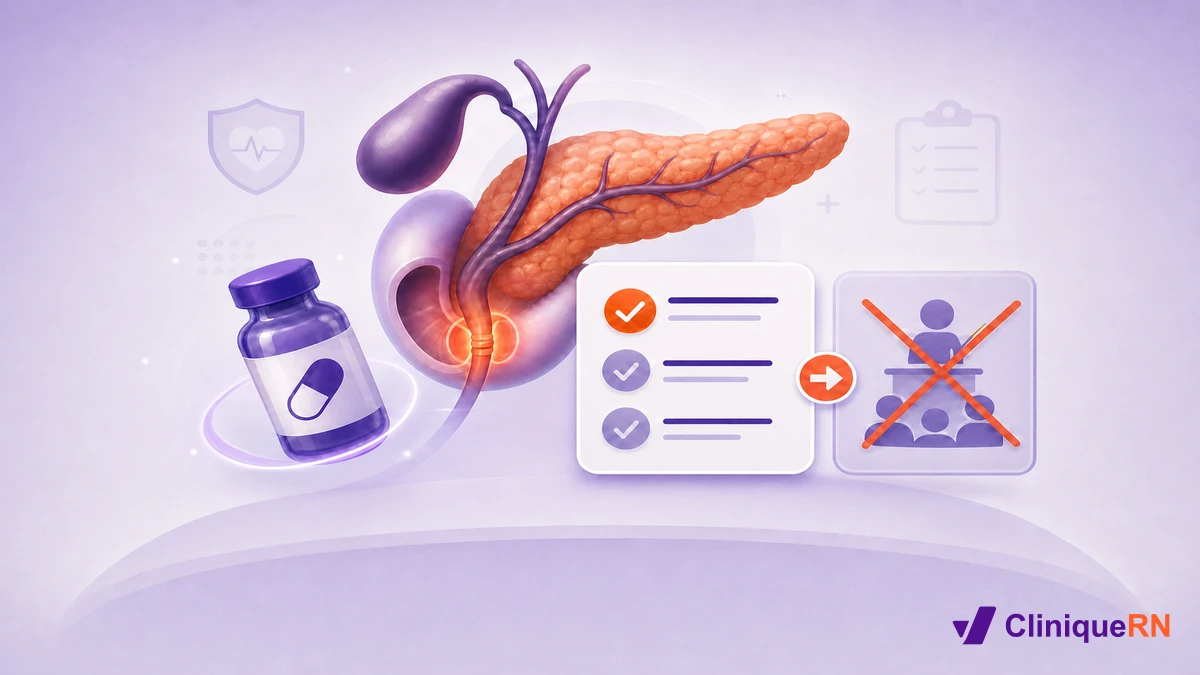
Is morphine contraindicated in pancreatitis? For decades, nursing students were taught that it is — that morphine must be avoided in acute pancreatitis because it triggers sphincter of Oddi spasm and worsens the disease. That teaching has never been supported by robust clinical outcome data, and the 2024 American College of Gastroenterology (ACG) Guidelines confirm it: morphine is not absolutely contraindicated in acute pancreatitis. Yet the NCLEX still tests your ability to recognise the clinical reasoning behind analgesic selection in pancreatitis, and the nuances matter enormously on exam day. This article breaks down the origin of the myth, the current evidence, what the 2026 NCLEX test plan expects, and how to approach the question correctly.
- Morphine is NOT absolutely contraindicated in acute pancreatitis. The longstanding sphincter of Oddi spasm concern was never validated by controlled clinical outcome studies.
- The 2024 ACG Guidelines do not list morphine as contraindicated, and opioids remain part of standard pain management for moderate-to-severe acute pancreatitis.
- On the NCLEX, withholding morphine because it "causes sphincter of Oddi spasm and worsens pancreatitis" reflects outdated dogma — not current evidence or NCSBN expectations.
The Classic Exam Trap with Morphine in Pancreatitis
Picture this classic NCLEX trap:
A client with acute pancreatitis reports pain rated 9/10. The physician orders IV morphine for pain management. Which action should the nurse take?
Where Did the Sphincter of Oddi Myth Come From?
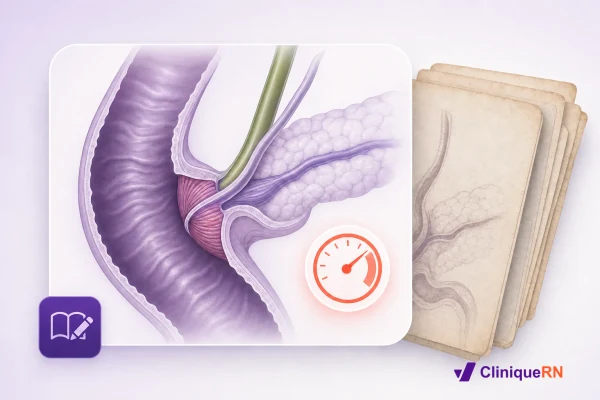
Morphine's contraindication myth traces to 1950s–1980s animal studies showing it elevated biliary tract pressure via sphincter of Oddi spasm. This reasoning spread from textbook to textbook for decades — never backed by a single controlled clinical trial in humans.
As an American Family Physician commentary pointed out as early as 2001, when you trace the original references behind the "morphine is contraindicated" teaching, you find a chain of review articles citing other review articles — not a single robust clinical trial demonstrating that morphine worsened outcomes in patients with acute pancreatitis.
What Does the Actual Evidence Show on Morphine and Pancreatitis?
1. All Opioids Affect the Sphincter of Oddi — Including Meperidine
A landmark review published in the American Journal of Gastroenterology (Thompson, 2001) conducted a systematic literature search to evaluate the sphincter of Oddi (SO) effects of all narcotic analgesics. All opioids, including meperidine, increased biliary pressure. Morphine was associated with the largest pressure elevation in initial animal and surgical studies. However, later studies using direct ERCP-guided sphincter of Oddi manometry found that the SO is "exquisitely sensitive to all narcotics, including meperidine."
No studies or evidence exist to indicate morphine is contraindicated for use in acute pancreatitis.
Thompson DR, Am J Gastroenterol, 2001
In other words, meperidine was never proven to be meaningfully safer than morphine for the sphincter — and it carries its own significant risks: the neurotoxic metabolite normeperidine, seizures in renal impairment, and serotonin syndrome risk.
2. Clinical Outcome Studies Show No Evidence of Morphine Worsening Acute Pancreatitis
A 2024 international multicentre cohort study published in the United European Gastroenterology Journal (Pandanaboyana et al., 2024) prospectively enrolled consecutive patients admitted with a first episode of acute pancreatitis. While opioid use was associated with moderately severe AP, the authors explicitly noted this finding was "confounded by indication" — sicker patients with more pain naturally receive more opioids, making it impossible to conclude opioids caused the severity. A systematic review and meta-analysis of randomised controlled trials comparing analgesic protocols in acute pancreatitis found that current evidence does not support withholding opioids based on type of agent used.
3. The Sphincter of Oddi-Pain Link Was Never Proven
Even the anatomical mechanism never held up clinically. The AAFP noted in 2001 that "the link between spasm in the sphincter of Oddi and abdominal pain is unproved" — meaning that even if morphine does elevate SO pressure slightly more than other opioids, there was never a validated pathway from SO pressure increase to worsened pancreatitis outcomes.
Myth vs. Evidence: What Major Guidelines Say in 2024–2026
The 2024 ACG Guidelines do not list morphine as contraindicated in acute pancreatitis, describing adequate pain control as a fundamental early priority. StatPearls (2025) confirms opioids — once avoided over sphincter concerns — are now essential to AP pain management.
The ACG guidelines acknowledge that analgesic selection in AP is an area where further randomised trials are still warranted, reflecting that no single agent has been definitively proven superior. Opioids — which may include morphine, hydromorphone, or fentanyl based on clinical context — remain part of standard pain management for moderate-to-severe AP.
Why Is Meperidine (Demerol) No Longer the "Safe Alternative"?
This is the second half of the outdated dogma — that meperidine (pethidine/Demerol) should be preferred over morphine in pancreatitis. Here is the clinical reality in 2026, mapping each historical concern to what the evidence actually shows.
| Concern | What the Evidence Shows |
|---|---|
| Meperidine and SO spasm | Meperidine also increases sphincter of Oddi pressure; it is NOT significantly safer than morphine in this regard. |
| Normeperidine toxicity | Meperidine is metabolised to normeperidine, a neurotoxic metabolite that accumulates with repeated dosing and in renal impairment — causing tremors, myoclonus, and seizures. |
| Serotonin syndrome risk | Meperidine has serotonergic activity; co-administration with SSRIs, MAOIs, or tramadol is dangerous. |
| Duration of action | Meperidine has a shorter duration than morphine, requiring more frequent dosing and increasing normeperidine accumulation. |
| Current clinical use | Meperidine use has declined sharply in most institutions; many hospitals have restricted or removed it from formulary. |
The NCLEX now tests this nuance. A question that presents meperidine as the "safe" or "preferred" choice for pancreatitis should be treated as a trap answer.
What the 2026 NCLEX Tests on This Topic
Under the 2026 NCSBN NCLEX-RN Test Plan (effective April 1, 2026), this topic falls squarely within Physiological Integrity → Pharmacological and Parenteral Therapies (13–19% of exam): medication order review and safe administration, recognising appropriate vs. inappropriate pharmacological interventions, monitoring for adverse effects and contraindications, and pain management as a core nursing responsibility. It also touches Basic Care and Comfort (pharmacological pain management) and Management of Care (applying clinical judgment when evaluating orders).
Applying the Clinical Judgment Measurement Model (CJMM) to a Pancreatitis-Analgesic Question
- Recognise Cues — Patient with acute pancreatitis, pain rated 9/10, morphine ordered.
- Analyse Cues — Is there a clinical reason to withhold? Is morphine contraindicated by current guidelines?
- Prioritise Hypotheses — Pain management is a priority; there is no evidence-based contraindication.
- Generate Solutions — Administer as ordered; monitor pain response and adverse effects.
- Take Action — Administer morphine per the order.
- Evaluate Outcomes — Monitor for respiratory depression, nausea, and pain relief.
What the NCLEX Expects You to Know
- Morphine is not absolutely contraindicated in acute pancreatitis — current evidence does not support withholding it.
- Meperidine is no longer the preferred analgesic for pancreatitis due to its neurotoxic metabolite and serotonergic risks — and it is not meaningfully safer for the sphincter of Oddi.
- Opioids remain part of moderate-to-severe AP pain management and may include morphine, hydromorphone, or fentanyl based on clinical context.
- The nurse's priority when an analgesic is ordered is to assess and manage pain effectively, monitor for adverse effects, and use clinical judgment — not to reflexively withhold based on outdated teaching.
- You should NOT answer "Withhold morphine because it causes sphincter of Oddi spasm and worsens pancreatitis" — this reflects outdated dogma, not current evidence or NCSBN expectations.
- S — Spasm concern (sphincter of Oddi spasm) was the original reason morphine was avoided.
- P — Proven by animal studies only — never by controlled clinical outcomes in humans.
- A — All opioids affect SO pressure, including meperidine — it is not uniquely safer.
- S — Standard guidelines (ACG 2024) do not list morphine as contraindicated.
- M — Manage pain: it remains a nursing priority regardless of opioid type.
CliniqueRN Practice Questions
A client is admitted with acute pancreatitis and rates their pain 8/10. The physician orders IV morphine sulfate 2–4 mg every 4 hours PRN for pain. Which action should the nurse take?
A client with a history of moderate acute pancreatitis is receiving meperidine (Demerol) 75 mg IM every 3 hours for pain. After three doses, the client begins exhibiting tremors and appears increasingly agitated. Which nursing action is the priority?
A 42-year-old client is admitted with acute pancreatitis (epigastric pain 9/10 radiating to the back, nausea, elevated lipase at 1,840 U/L, no signs of biliary obstruction) and has no known allergies. The physician orders hydromorphone (Dilaudid) 0.5 mg IV every 4 hours PRN for pain ≥6/10. The client asks: 'My last nurse told me they couldn't give me morphine for my pancreatitis. Is this medication also going to make it worse?' What is the nurse's best response?

The Nuance the NCLEX Won't Test (But Clinicians Should Know)
Newer animal models and observational data suggest opioids may associate with more severe disease — but causation cannot be proven, and the association is confounded by indication. Current human RCTs and all major guidelines still affirm opioid analgesia as appropriate for acute pancreatitis pain.
Frequently Asked Questions
Is morphine contraindicated in acute pancreatitis?
Where did the myth that morphine worsens pancreatitis come from?
Why is meperidine (Demerol) no longer the preferred analgesic for pancreatitis?
What is normeperidine toxicity and how should a nurse respond?
What do the 2024 ACG Guidelines say about pain management in acute pancreatitis?
How does the 2026 NCLEX test the morphine-pancreatitis topic?
Sources and References
- American College of Gastroenterology (ACG). Tenner S, Vege SS, Sheth SG, et al. American College of Gastroenterology Guidelines: Management of Acute Pancreatitis. Am J Gastroenterol. 2024;119(3):419–437. DOI: 10.14309/ajg.0000000000002645
- NCSBN. 2026 NCLEX-RN Test Plan. National Council of State Boards of Nursing. Effective April 1, 2026. Available at: ncsbn.org
- Thompson DR. Narcotic Analgesic Effects on the Sphincter of Oddi: A Review of the Data and Therapeutic Implications in Treating Pancreatitis. Am J Gastroenterol. 2001;96(4):1266–1272. PMID: 11316181
- Pandanaboyana S, Knoph CS, Olesen SS, et al. Opioid analgesia and severity of acute pancreatitis: An international multicentre cohort study on pain management in acute pancreatitis. United European Gastroenterol J. 2024;12(3):326–338. DOI: 10.1002/ueg2.12542
- Thavanesan N, White S, Lee S, et al. Analgesia in the Initial Management of Acute Pancreatitis: A Systematic Review and Meta-Analysis of Randomised Controlled Trials. World J Surg. 2022;46:878–890.
- StatPearls — Morphine. NCBI Bookshelf. Updated 2025. Available at: ncbi.nlm.nih.gov/books/NBK526115
- Barlass U, Dutta R, Cheema H, et al. Morphine worsens the severity and prevents pancreatic regeneration in mouse models of acute pancreatitis. Gut. 2018;67:600–602.
- AAFP. Meperidine or Morphine in Acute Pancreatitis? Am Fam Physician. 2001;64(2):219. Available at: aafp.org
- Children's Hospital of Richmond at VCU. Clinical Pathway: Acute Pancreatitis (Paediatric Gastroenterology). Available at: chrichmond.org
- Knoph CS, et al. Guidelines towards comprehensive care in acute pancreatitis. HepatoBiliary Surg Nutr. 2024;13(5):888–890.
Master High-Yield NCLEX Pharmacology and Clinical Judgment Questions on CliniqueRN
Start Free PracticeKeep Reading
- Should You Withhold Opioids from Patients in Sickle Cell Crisis? The Dogma, The Bias, and What the NCLEX Actually Tests
- MONA Mnemonic Obsolete for ACS: 2025 AHA/ACC Guidelines & the NCLEX
- 7 Uncommon NCLEX Study Tactics That Actually Work
- The NCLEX Delegation Blueprint (Mark K's E.A.T. Rule Will Save Your Score)
- NCLEX Cardiac Nursing Essentials: Heart Conditions, Meds & Priority Interventions