MONA Mnemonic Obsolete for ACS: 2025 AHA/ACC Guidelines & the NCLEX
The MONA mnemonic is obsolete for ACS — and if you still reach for Morphine, Oxygen, Nitrates, and Aspirin every time chest pain walks through the door, the NCLEX will mark you wrong. MONA was the standard mnemonic for acute MI management for decades, but the 2025 ACC/AHA/ACEP/NAEMSP/SCAI Guideline for the Management of Patients With Acute Coronary Syndromes has dismantled three of its four pillars. Today, only Aspirin survives as a routine recommendation for all ACS patients. This article — Part 3 of the CliniqueRN Outdated Dogma Series — breaks down exactly what changed, why, and how the 2026 NCLEX now tests evidence-based clinical judgment instead of 20th-century mnemonics.
- Only Aspirin survives MONA as a routine recommendation for all ACS patients without contraindication.
- Morphine has been downgraded to Class IIb and carries evidence of harm in NSTEMI — it delays P2Y12 inhibitor absorption.
- Routine oxygen is no longer recommended for non-hypoxic patients (SpO₂ ≥ 90%) — it may increase myocardial injury.
- Nitrates carry three absolute contraindications — RV infarction, hypotension, and recent PDE5 inhibitor use — that can cause haemodynamic collapse.
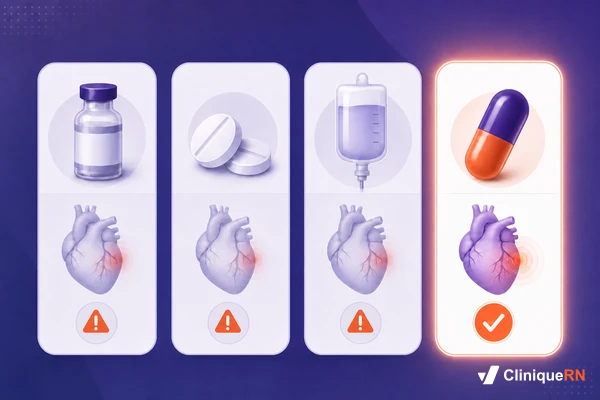
What Survived MONA — and What Didn't
Of MONA's four letters, only Aspirin remains a Class I routine recommendation for all ACS patients. Morphine is now Class IIb (refractory pain only), oxygen is conditional on SpO₂ < 90%, and nitrates carry three absolute contraindications. The NCLEX tests current, evidence-based ACS management — not the legacy mnemonic.
The Mnemonic That Outlived Its Evidence
For a generation of nurses and paramedics, MONA was the cardiac chest pain mnemonic. Chest pain arrives — you think:
The Original MONA Logic
- Morphine → relieve pain and reduce sympathetic drive
- Oxygen → increase myocardial oxygen supply
- Nitrates → vasodilate and reduce ischemic pain
- Aspirin → inhibit platelet aggregation
The logic was clean. The teaching was consistent. And for the era before primary percutaneous coronary intervention (PCI), when treating ACS meant managing symptoms until the clot either resolved or the patient died, it was defensible. That era is over.
MONA is out of date. It was only used for heart attacks before doctors had better options.
Mariell Jessup, M.D., Chief Science and Medical Officer, American Heart Association
As early as 2016, researchers formally pleaded with academic journals to stop using MONA as a teaching tool. By 2018, a peer-reviewed evidence review in Cureus titled "Morphine, Oxygen, Nitrates, and Mortality — Reducing Pharmacological Treatment for Acute Coronary Syndrome" concluded that "MONA should be viewed as an obsolete teaching and learning aid, and therefore we recommend that its use be discontinued for the management of ACS."
This is not a minor update. This is a complete re-evaluation of three out of four components of one of the most widely taught clinical mnemonics in nursing history. Let us go through each one.
The 2025 ACC/AHA ACS Guidelines — The Current Authority
All clinical recommendations in this article are grounded in the 2025 ACC/AHA/ACEP/NAEMSP/SCAI Guideline for the Management of Patients With Acute Coronary Syndromes, published in JACC and Circulation.
Rao SV, O'Donoghue ML, et al. DOI: 10.1161/CIR.0000000000001309. This is the most comprehensive and current unified ACS guideline, replacing all prior separate STEMI and NSTEMI documents from 2013–2015.
A — Aspirin Survives
Status: STILL RECOMMENDED. Class I. Give to all ACS patients without contraindication. Aspirin is the one element of MONA that remains unambiguously standard. It is the only piece of the MONA mnemonic that still proves to have a significant medical effect supported by strong evidence. In 1990, it was given a Class I recommendation for almost all patients with myocardial infarction, and those recommendations are still in place today.
What the 2025 AHA/ACC Guidelines Say About Aspirin
- Immediate aspirin 162–325 mg loading dose for all suspected ACS patients without contraindication.
- Followed by low-dose maintenance 75–100 mg daily long-term.
- The 75–100 mg daily maintenance dose is now favoured over full-dose aspirin 300–325 mg daily — which was not superior for MACE reduction but was associated with increased gastrointestinal bleeding.
Aspirin is the ONE intervention in MONA still routinely indicated for ALL ACS patients without contraindication. It is also the priority first medication in most exam scenarios — even before nitrates — because its antiplatelet action begins within minutes.
Critical Addition — P2Y12 Inhibitors. Modern ACS management goes well beyond aspirin alone. Dual antiplatelet therapy (DAPT) — aspirin plus a P2Y12 inhibitor — is recommended for people with ACS. The 2025 guidelines specify DAPT for at least 12 months in patients not at high bleeding risk, and ticagrelor or prasugrel are now explicitly recommended over clopidogrel in patients undergoing PCI due to superior efficacy in reducing major adverse cardiovascular events.
O — Oxygen Is Conditional: Not Routine for Non-Hypoxic Patients
Status: CLASS III (HARM) for SpO₂ ≥ 90%. Only indicated when hypoxia is present. This is one of the most counterintuitive reversals in modern cardiovascular nursing. For over a century — since a 1900 study linking oxygen to relief of angina — supplemental oxygen was reflexively given to every chest pain patient. The 2025 guidelines ended that practice based on robust trial evidence.
Supplemental oxygen has historically been administered as part of routine care in suspected ACS, although evidence of clinical benefit in the absence of hypoxia has been lacking. Randomised trials enrolling patients with MI and without hypoxia have not demonstrated any clinical benefit from routine supplemental oxygen and have raised concerns that it may increase myocardial injury.
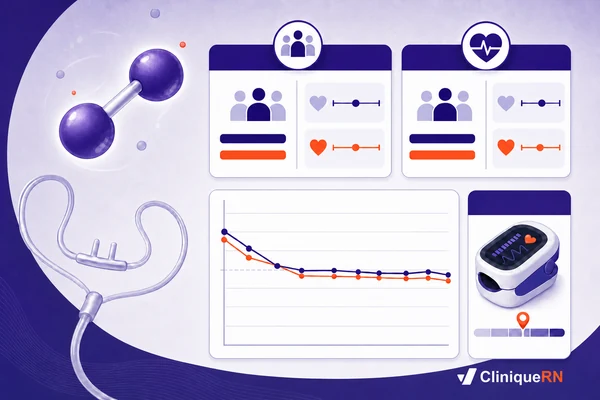
The Landmark Oxygen Trials: AVOID and DETO2X-AMI
The AVOID trial studied STEMI patients with SpO₂ ≥ 94% and found no benefit from supplemental oxygen — plus a possible increase in myocardial injury and infarct size. DETO2X-AMI enrolled 6,629 patients with suspected MI and SpO₂ ≥ 90% and found no cardiovascular benefit. Hyperoxia causes coronary vasoconstriction and increases oxygen free radical formation.
Landmark Trials
Evidence Against Routine Oxygen
- AVOID Trial (Air Versus Oxygen in STEMI) — STEMI patients with SpO₂ ≥ 94% — no benefit from supplemental oxygen and a possible increase in myocardial injury and infarct size. Proposed mechanism: hyperoxia causes coronary vasoconstriction, increases oxygen free radical formation, increases reperfusion injury, and elevates coronary vascular resistance.
- DETO2X-AMI Trial — Enrolled 6,629 patients with suspected MI and SpO₂ ≥ 90%. Supplemental oxygen did not demonstrate cardiovascular benefit.
What the 2025 ACC/AHA Guidelines Say About Oxygen
- Supplemental O₂ is indicated only for patients with SpO₂ < 90%.
- Routine supplemental oxygen in non-hypoxic ACS patients is not recommended.
- The relationship between oxygenation and outcomes appears U-shaped — both hypoxia and hyperoxia are harmful.
- A systematic review and meta-analysis in acutely ill adults without hypoxia suggested worse short- and long-term mortality with liberal compared with conservative supplemental oxygen administration.
If a patient has chest pain with SpO₂ of 96% and an answer option says 'apply oxygen via nasal cannula at 2–4 L/min,' that is increasingly a wrong answer on current NCLEX items. The correct action is to monitor SpO₂ and apply oxygen only if it falls below 90%. Reflexive oxygen for chest pain without documented hypoxia is no longer supported by guidelines.
N — Nitrates Are Conditional: Critical Absolute Contraindications
Status: Still useful for ischaemic pain relief — but with absolute contraindications that can kill the patient. Nitrates (nitroglycerin/GTN) remain a valuable intervention for the symptomatic relief of ischaemic chest pain. This element of MONA is not discarded, but the dogmatic "give nitrates for all chest pain" teaching ignores three absolute contraindications that are among the highest-yield pharmacology points on the NCLEX.
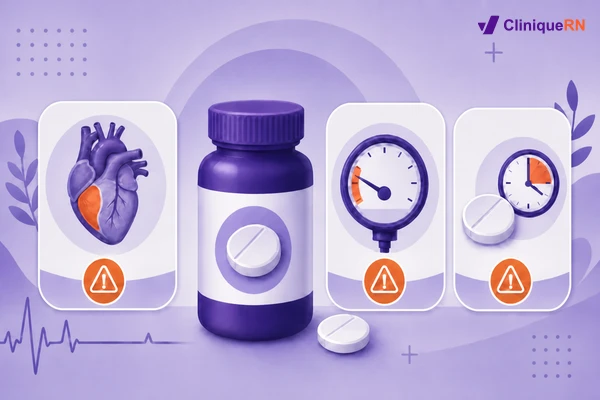
The Three Absolute Nitrate Contraindications
Before giving nitroglycerin, the nurse must rule out right ventricular infarction (preload-dependent — nitrates cause haemodynamic collapse), hypotension (SBP < 90 mmHg or > 30 mmHg below baseline), and recent PDE5 inhibitor use (sildenafil, tadalafil, vardenafil, avanafil). Each one can convert a routine drug into a lethal error.
What Nitrates Do
- Venous and arterial vasodilation → decrease cardiac preload and afterload → reduce myocardial oxygen demand.
- Coronary artery dilation → increase myocardial oxygen supply.
- Effective symptomatic relief for ischaemic pain.
Contraindication 1 — Right Ventricular Infarction
The RV is preload-dependent. Nitrates cause profound venodilation and drop venous return to the right heart. In a patient with RV infarction, this drops RV output catastrophically — leading to severe hypotension, haemodynamic collapse, and death. The contraindication of nitrates in RV infarction is a well-established principle maintained across multiple decades of guidelines. The critical error is administering nitrates to patients with inferior STEMI without first obtaining a right-sided ECG. Inferior wall MIs frequently involve the right ventricle, and failure to identify RV involvement before nitrate administration can result in severe hypotension or haemodynamic collapse.
Any patient with inferior STEMI — ST elevation in leads II, III, and aVF — needs a right-sided ECG before nitrates. If V4R shows ST elevation, nitrates are absolutely contraindicated.
Contraindication 2 — Hypotension
Nitrates are contraindicated in patients with systolic BP < 90 mmHg, or systolic BP > 30 mmHg below baseline. Nitrates further drop blood pressure through venodilation; giving them to a haemodynamically compromised patient will worsen shock. The 2025 ACC/AHA guidelines are explicit: avoid nitrates if systolic BP < 90 mmHg or > 30 mmHg below baseline.
Contraindication 3 — Recent PDE5 Inhibitor Use
Phosphodiesterase-5 inhibitors potentiate the hypotensive effect of nitrates by blocking the enzymatic breakdown of cGMP in vascular smooth muscle. The combined effect can cause catastrophic, potentially fatal hypotension. The 2025 ACC/AHA guidelines state that nitrates should not be administered after recent PDE5 inhibitor use.
| PDE5 Inhibitor | Brand | Avoid Nitrates Within |
|---|---|---|
| Avanafil | Stendra | 12 hours |
| Sildenafil | Viagra | 24 hours |
| Vardenafil | Levitra | 24 hours |
| Tadalafil | Cialis | 48 hours |
Exam questions will present a patient with chest pain whose history includes Viagra or Cialis use. A nurse who gives nitroglycerin without assessing for recent PDE5 inhibitor use is choosing the wrong and potentially lethal answer. Always assess sexual health history before administering nitrates.
M — Morphine Downgraded: Evidence of Harm in NSTEMI
Status: CLASS IIb — may be reasonable only for refractory pain after nitrates. Not first-line. Associated with increased mortality in NSTEMI. Morphine is the most dramatically reversed component of MONA. What was once "the analgesic of choice" in ACS is now considered potentially harmful, especially in NSTEMI, and has been demoted from a Class I recommendation to Class IIb.
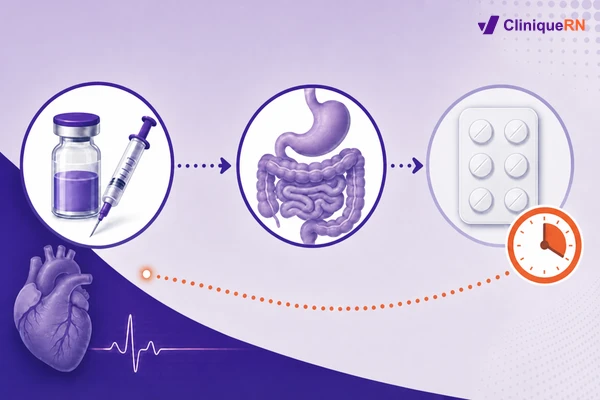
Why Morphine Fell From Favour: The P2Y12 Interaction
Morphine delays gastric emptying and slows GI transit, reducing absorption and peak plasma concentration of orally administered P2Y12 inhibitors (clopidogrel, ticagrelor, prasugrel). The result is delayed and blunted antiplatelet effect during the critical peri-PCI window. The IMPRESSION trial confirmed morphine attenuates ticagrelor exposure and platelet inhibition.
1. The CRUSADE Registry — 2005 Landmark
Use of morphine alone or in combination with nitroglycerin for patients presenting with NSTE ACS was associated with higher mortality even after risk adjustment and matching on propensity score for treatment. This landmark observational study of over 57,000 patients was the beginning of the end for routine morphine in ACS. While observational data cannot prove causation, the consistency of the signal across studies was enough for guidelines to downgrade the recommendation.
2. The P2Y12 Interaction — The Mechanistic Smoking Gun
The most clinically important and mechanistically compelling reason morphine is problematic in ACS is its interaction with P2Y12 inhibitors — clopidogrel, ticagrelor, and prasugrel — the antiplatelet agents that are now a cornerstone of ACS treatment. Morphine delays gastric emptying and slows GI transit, reducing the absorption and peak plasma concentration of orally administered P2Y12 inhibitors. The result is delayed and blunted antiplatelet effect during the critical peri-PCI window.
Among patients pre-treated with clopidogrel loading dose, concomitant morphine was associated with an increase in periprocedural and early spontaneous ischaemic complications, potentially due to impaired absorption of the P2Y12 inhibitor. The IMPRESSION trial, published in 2016 in the European Heart Journal, confirmed this directly: morphine delayed and attenuated ticagrelor exposure and platelet inhibition in patients with MI.
3. Additional Morphine Concerns in ACS
Other Reasons Morphine Is Problematic
- Sedation masks symptom progression — the patient cannot tell you if their pain is worsening.
- Morphine has direct prothrombotic effects in some studies.
- Nausea and vomiting from morphine can complicate clinical monitoring.
- Respiratory depression may compound haemodynamic instability.
What the 2025 ACC/AHA Guidelines Say About Morphine
- Morphine is not a first-line analgesic for ACS.
- It may be considered for pain refractory to maximally tolerated nitrates — a conditional indication only.
- When morphine is used, clinicians should be aware of its potential to delay P2Y12 inhibitor absorption and blunt antiplatelet therapy.
Instead of giving every patient with chest pain morphine, nurses should prioritise early recognition, ECG, and diagnostic workup.
What Has Replaced Morphine for ACS Pain?
The Shift in Pain Strategy
- Nitrates remain first-line for ischaemic pain relief when not contraindicated.
- Fentanyl has been studied as an alternative to morphine for procedural analgesia — but also has some P2Y12 interaction data from the PACIFY trial.
- The focus has shifted from pain management as the primary goal to reperfusion as the goal — once PCI opens the artery, the pain resolves.
The Modern ACS Framework — What Actually Replaces MONA
If MONA is retired, what does the NCLEX and clinical practice actually expect? The new framework for ACS management is anchored in three pillars.
The Three Pillars of Modern ACS Management
- Pillar 1 — Rapid Recognition and Diagnostic Priority: 12-lead ECG within 10 minutes of presentation (a quality benchmark); serial high-sensitivity troponins using 0 h/1 h or 0 h/2 h protocols; right-sided ECG for all inferior STEMI patients before nitrates; posterior leads V7–V9 if posterior MI is suspected.
- Pillar 2 — Antiplatelet + Anticoagulation Therapy: Aspirin 162–325 mg immediately (Class I); P2Y12 inhibitor, with ticagrelor or prasugrel preferred over clopidogrel for PCI patients (Class I); anticoagulation with unfractionated heparin, enoxaparin, or bivalirudin based on presentation and reperfusion strategy.
- Pillar 3 — Reperfusion (the Primary Goal): Primary PCI is the gold standard for STEMI (door-to-balloon time < 90 minutes); fibrinolysis if PCI cannot be performed within 120 minutes of first medical contact; complete revascularisation now recommended, not just culprit-lesion treatment; radial access preferred over femoral access for PCI.
Additional Agents Now Standard That Were Not in MONA
New Standard ACS Agents
- Beta-blockers: reduce heart rate and myocardial O₂ demand; initiate within 24 hours if no contraindications.
- High-intensity statins: initiated during hospitalisation for all ACS patients.
- ACE inhibitors/ARBs: for EF ≤ 40% or heart failure.
- Anticoagulation: heparin or enoxaparin.
The New Mnemonic: THROMBINS²
Several educators have proposed replacing MONA with THROMBINS² to reflect current evidence-based ACS management.
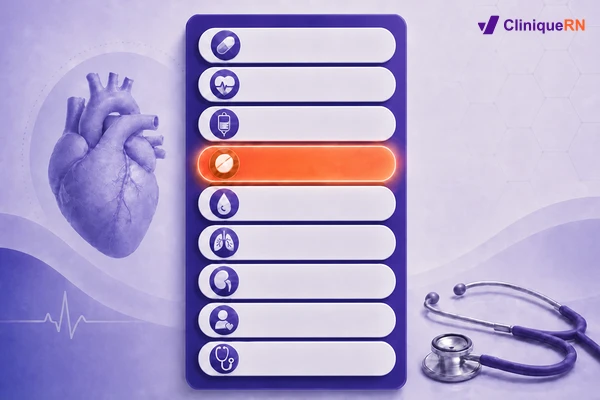
THROMBINS² — The Evidence-Based Replacement for MONA
THROMBINS² captures modern ACS care: Thienopyridines, Heparin, Reperfusion, Oxygen (only if SpO₂ < 90%), Morphine (refractory pain only), Beta-blockers, Inhibitors (ACE/ARB), Nitrates (with contraindication awareness), and Statins plus Stool softeners. Reperfusion — not symptom relief — is the primary goal.
- T — Thienopyridines/P2Y12 inhibitors: clopidogrel, ticagrelor, prasugrel
- H — Heparin/anticoagulation
- R — Reperfusion: PCI or fibrinolysis; the primary goal
- O — Oxygen: only if SpO₂ < 90%
- M — Morphine: only for refractory pain; conditional, with caution
- B — Beta-blockers
- I — Inhibitors: ACE inhibitors/ARBs
- N — Nitrates: for ischaemic pain, with absolute contraindication awareness
- S² — Statins + stool softeners to prevent Valsalva-induced dysrhythmia
CliniqueRN Mnemonic: The MONA Autopsy
Use this to remember what changed and why.
- M — Morphine: Moved to last resort — CRUSADE data + P2Y12 absorption delay
- O — Oxygen: Only if hypoxic — AVOID and DETO2X trials proved routine O₂ causes harm
- N — Nitrates: Never without checking BP, RV infarct, and PDE5 inhibitor use
- A — Aspirin: Absolutely still indicated — the one survivor
What the 2026 NCLEX Tests on This Topic
Under the 2026 NCSBN NCLEX-RN Test Plan, effective April 1, 2026, ACS pharmacology is a major content area within several client-needs categories.
NCLEX Test Plan Alignment
- Physiological Integrity → Pharmacological and Parenteral Therapies (12–18%): appropriate medication administration, contraindication recognition, medication safety.
- Physiological Integrity → Reduction of Risk Potential (9–15%): recognising life-threatening clinical deterioration, avoiding iatrogenic harm.
- Physiological Integrity → Physiological Adaptation (11–17%): managing acute cardiovascular events.
- Safe and Effective Care Environment → Management of Care: clinical prioritisation, adverse event prevention.
CJMM Applied to ACS
| CJMM Step | Application to ACS Scenario |
|---|---|
| 1. Recognise Cues | Chest pain, diaphoresis, ST changes, haemodynamic status, medication history |
| 2. Analyse Cues | Is the patient hypoxic? Is there inferior ST elevation? Any PDE5 inhibitor use? Any hypotension? |
| 3. Prioritise Hypotheses | STEMI vs NSTEMI? RV involvement? Haemodynamic compromise? |
| 4. Generate Solutions | Aspirin + P2Y12 if not contraindicated; nitrates if no absolute contraindications; O₂ only if SpO₂ < 90%; ECG within 10 min; activate cath lab |
| 5. Take Action | Administer in correct sequence; avoid morphine as first-line |
| 6. Evaluate Outcomes | Pain relief? ST changes improving? Haemodynamic stability? Troponin trend? |
CliniqueRN Practice Questions
A client arrives at the ED with crushing substernal chest pain radiating to the left arm. The nurse obtains a 12-lead ECG showing ST elevation in leads II, III, and aVF. The client's blood pressure is 92/60 mmHg. Which medication should the nurse prepare to administer FIRST?
A client with chest pain took sildenafil (Viagra) approximately 18 hours ago. The 12-lead ECG shows ST depression in V4–V6 consistent with NSTEMI. Vital signs: BP 148/88, HR 92, SpO₂ 97%, RR 18. The physician orders sublingual nitroglycerin 0.4 mg. Which action should the nurse take?
A nurse is admitting a client with a confirmed NSTEMI who is now pain-free following two sublingual nitroglycerin tablets. Vital signs: BP 136/82, HR 84, SpO₂ 96%, RR 16. The physician orders supplemental oxygen at 2 L/min via nasal cannula. Which nursing action is most appropriate?
Question 4: NGN-Style Bow-Tie
Clinical Scenario: A 58-year-old male is brought by EMS to the ED with a 45-minute history of severe, crushing chest pain, diaphoresis, and nausea. The 12-lead ECG on arrival shows ST elevation in leads II, III, aVF and V4R. BP 108/68, HR 98, SpO₂ 94%, RR 20. The patient reports taking tadalafil (Cialis) 30 hours ago.
NGN Bow-Tie (Left Stem) — Based on the assessment findings, identify the condition most likely present.
NGN Bow-Tie (Right Stem) — For this client with inferior STEMI and RV involvement, select the THREE priority nursing actions at this time.
Evidence Verification Summary
| Claim | Source | Status |
|---|---|---|
| Aspirin Class I for all ACS without contraindication | 2025 ACC/AHA ACS Guidelines | Confirmed |
| Routine O₂ not recommended if SpO₂ ≥ 90% | 2025 ACC/AHA; AVOID trial; DETO2X-AMI | Confirmed |
| O₂ may increase myocardial injury in non-hypoxic patients | AVOID trial; multiple RCT meta-analyses | Confirmed |
| Nitrates contraindicated in RV infarction | 2025 ACC/AHA; consistent across all guidelines since 1990 | Confirmed |
| Nitrates contraindicated within 24h sildenafil use | 2025 ACC/AHA ACS Guidelines, Circulation | Confirmed |
| Morphine associated with increased NSTEMI mortality | CRUSADE Registry; multiple observational studies | Confirmed |
| Morphine delays P2Y12 inhibitor absorption | IMPRESSION trial; PACIFY trial; multiple RCTs | Confirmed |
| MONA described as "obsolete" by AHA leadership | AHA CMO Dr. Jessup; Cureus 2018 evidence review | Confirmed |
| DAPT (aspirin + P2Y12) ≥ 12 months standard | 2025 ACC/AHA ACS Guidelines | Confirmed |
| Ticagrelor/prasugrel preferred over clopidogrel for PCI | 2025 ACC/AHA ACS Guidelines | Confirmed |
Frequently Asked Questions
Is MONA still used for ACS?
Why is morphine no longer first-line in ACS?
When are nitrates contraindicated in ACS?
Is oxygen still given for chest pain?
What replaces MONA for ACS management?
Why must inferior STEMI patients get a right-sided ECG before nitrates?
Verified Sources and References
- Rao SV, O'Donoghue ML, Ruel M, et al. 2025 ACC/AHA/ACEP/NAEMSP/SCAI Guideline for the Management of Patients With Acute Coronary Syndromes. JACC and Circulation. 2025. DOI: 10.1161/CIR.0000000000001309
- Jessup M. Quote: "MONA is out of date." Chief Science and Medical Officer, American Heart Association. Via HealthCentral, 2023.
- Nunes de Alencar Neto J. Morphine, Oxygen, Nitrates, and Mortality Reducing Pharmacological Treatment for Acute Coronary Syndrome: An Evidence-Based Review. Cureus. 2018. DOI: 10.7759/cureus.2114. PMID: 29581926
- Meine TJ, Roe MT, Chen AY, et al. Association of intravenous morphine use and outcomes in acute coronary syndromes: results from the CRUSADE Quality Improvement Initiative. Am Heart J. 2005;149:1043–1049. PMID: 15976786
- Kubica J, Adamski P, Ostrowska M, et al. Morphine delays and attenuates ticagrelor exposure and action in patients with myocardial infarction: the randomized, double-blind, placebo-controlled IMPRESSION trial. Eur Heart J. 2016;37:245–252.
- Stub D, et al. AVOID Trial. Air Versus Oxygen in ST-Segment Elevation Myocardial Infarction. Circulation. 2015;131:2143–2150.
- Hofmann R, et al. DETO2X-AMI Trial. Oxygen Therapy in Suspected Acute Myocardial Infarction. N Engl J Med. 2017;377:1240–1249.
- NCSBN. 2026 NCLEX-RN Test Plan. Effective April 1, 2026. ncsbn.org/publications/2026-nclex-rn-test-plan
- NursingCECentral. Deadly Mnemonics: Stop Using MONA to Manage Acute Coronary Syndrome. 2024.
- ESC. 2023 ESC Guidelines for the Management of Acute Coronary Syndromes.
Master evidence-based ACS pharmacology with real NGN-style questions on CliniqueRN.
Start Free PracticeKeep Reading
- Is Morphine Contraindicated in Pancreatitis? What the NCLEX Tests vs. What the Evidence Actually Says
- Should You Withhold Opioids from Patients in Sickle Cell Crisis? The Dogma, The Bias, and What the NCLEX Actually Tests
- NCLEX Cardiac Nursing Essentials: Heart Conditions, Meds & Priority Interventions
- Coronary Artery Disease (CAD): Understanding the Leading Cause of Heart Attacks
- NCLEX Respiratory Questions: COPD, Asthma, Pneumonia & PE Study Guide
- 10 Genius NCLEX Hacks Every Nursing Student Needs to Know (No One Talks About #3!)